Muizzu: Promises vs Reality

Live Tracker — Every Statement Documented

Last updated: 4 September 2026  |  36 entries tracked  |  11 promises monitored

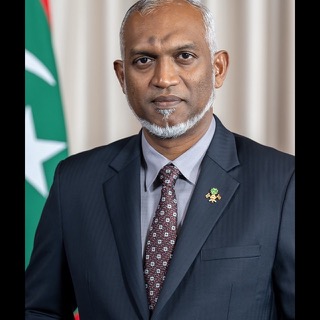
Official portrait of President Mohamed Muizzu
Official portrait · The President’s Office of the Republic of Maldives · CC BY 4.0
In his own words

“The Government formulates, passes, and ratifies bills only after conducting extensive technical studies.”

31 August 2026, ratifying seven bills in one ceremony
The industry says the 40% rule appeared weeks after the central bank proposed 20%, with no consultation. The GST change gave six weeks. source

40%

Of gross sales, forced conversion

MVR 22.80

Street USD vs 15.42 peg

6 wks

Notice on the new 17% GST

68.7%

Voted No in his referendum

Latest Statements & Updates

New statements are added here as they are documented. Items are sorted newest first.

Verification key. Every item on this site was checked in research and is one of two levels. Verified confirmed against a primary source or a major international outlet. Reported carried by a credible outlet, single-sourced or opinion. Claims that failed verification have been removed from this site entirely rather than shown with a caveat. Allegations untested in court are labelled as such in the text.
2 September 2026 — Claim Added 2 Sep 2026Verified
What happened: Police raided an investment company office on suspicion of large-scale unlicensed money changing in the parallel market, and urged the public to report illegal currency exchangers.
Why it matters: Enforcement is being directed at the symptom (parallel-market traders) rather than the cause (a dollar shortage the state has not resolved). The previous day's reporting was headlined 'nowhere left to buy a dollar'. The government continues to defend the MVR 15.42 peg while the street rate sits above MVR 20.
claim
2 September 2026 — Claim Added 3 Sep 2026Reported
What happened: Bank of Ceylon's Malé branch stopped issuing US dollars in exchange for rufiyaa for its smart remit service, telling customers the halt was due to difficulty sourcing dollars. The bank previously converted migrant workers' rufiyaa earnings to USD for outward remittances.
Why it matters: A foreign bank operating in Maldives can no longer source enough dollars to run a basic remittance product. This is the next step after the 1 September raid on Naid Investment (already in the feed): enforcement targets the parallel market while the formal market shrinks. Extends the existing dollar-crisis narrative — the tracker already records the MVR 20.50 street rate and the July MVR 20.70 peak.
claim
2 September 2026 — Claim Added 3 Sep 2026Reported
What happened: Adhadhu reported that state-owned enterprise employees are being told by superiors to join the ruling PNC or face dismissal. An unnamed SOE employee said their manager delivered an ultimatum: join the party or lose the job. The report notes that among staff already terminated in a government-ordered 33% SOE workforce reduction (targeting approximately 14,733 positions), a disproportionate number reportedly lacked PNC membership.
Why it matters: ALLEGATION, based on unnamed sources. If accurate, it would constitute political coercion of public-sector workers — a significant governance failure. The backdrop is real: the government has ordered large-scale SOE layoffs as an austerity measure, and PNC is actively recruiting ahead of its 15-18 September congress. Whether the layoffs are genuinely partisan or are simply perceived that way by affected workers is not established. Single-sourced to Adhadhu; no independent corroboration found this pass.
claimcorruption
Source: Adhadhu
2 September 2026 — Claim Added 3 Sep 2026Reported
What happened: The Local Government Authority directed all councils to obtain LGA approval before filling any position — permanent, contract, or temporary — citing the government's austerity measures. The directive was issued by LGA CEO Mohamed Nimal.
Why it matters: Centralises hiring decisions for elected local councils in a national agency. Arriving weeks after the opposition swept all five city mayoralties in April 2026, the timing invites a reading as a check on opposition-held councils' operational autonomy. The stated rationale (austerity) is consistent with the broader SOE and budget cuts, so both readings are plausible.
claim
2 September 2026 — Claim Added 3 Sep 2026Reported
What happened: Malé City Mayor Adam Azim warned that budget cuts following the removal of vehicle-related fees could make it difficult for the council to pay staff salaries in the coming months.
Why it matters: Azim is an opposition mayor (MDP, elected April 2026), so the statement may carry political motivation. However, the underlying fiscal pressure is consistent with the broader austerity pattern — LGA hiring controls were issued the same day. If council salary arrears materialise, it would be a concrete impact of centralised budget decisions on opposition-held local government.
claim
1 September 2026 — Contradiction NewAdded 4 Sep 2026Verified
“After deducting loans, salaries, and expenses, they can pay 40 percent in dollars”
What happened: The First Amendment to the Foreign Currency Act took effect, doubling mandatory conversion for Category A tourism establishments from 20% to 40% of monthly gross foreign-currency sales, monthly rather than quarterly, and removing the USD 500-per-tourist alternative. Ratified 31 August 2026. Entities that are 100% Maldivian-owned convert 7%. The amendment also bans promoting or advertising currency sales above the MMA's published rate, with fines up to MVR 1m for individuals and MVR 5m for legal entities.
Why it matters: The President described the 40% as applying after deducting loans, salaries and expenses. The Act applies it to GROSS SALES and specifies no deductions. That gap is the central dispute: a resort on a 25% margin converting 40% of gross converts more than its whole profit. His own tourism adviser Mohamed Khaleel resigned over the policy; MATI called it not viable and had been discussing 20% with the MMA weeks earlier.
contradictionclaim
Late August 2026 — Claim NewAdded 4 Sep 2026Verified
What happened: Muizzu ratified the Eighth Amendment to the GST Act, extending the 17% Tourism GST to offshore booking platforms, foreign tour operators and overseas travel agents supplying inbound tourism products, on the destination principle and levied on margin or commission. Effective 1 October 2026. MIRA projects MVR 1.61 billion in additional annual revenue. The same package raised withholding tax on non-resident construction contractors from 5% to 10%.
Why it matters: The principle is mainstream — the EU, New Zealand and Australia tax offshore sellers this way, and margin on a Maldivian room night is value arising in the Maldives. The execution is the problem: six weeks' notice, effective mid-season on rate sheets already signed; a combined charge near 27% where commissions already bear 10% withholding; no input tax deduction or relief against home-country tax; no apportionment rule for bundled packages; and no published derivation of the MVR 1.6bn estimate.
claim
31 August 2026 — Contradiction NewAdded 4 Sep 2026Verified
“The Government formulates, passes, and ratifies bills only after conducting extensive technical studies.”
What happened: Said at the ceremony ratifying seven bills at once — including both the 8th Amendment to the GST Act and the 1st Amendment to the Foreign Currency Act. He added that the forex amendment would provide 'critical economic relief, including curbing parallel market exchange rates', and that 'data and economic assessments demonstrate that the statutory foreign currency surrender and exchange requirements will neither disrupt resort operations nor hinder the payment of dollar-denominated salaries'. He also cautioned that the law 'must not be used as an excuse to reduce or withhold wages from employees paid in US dollars'.
Why it matters: Three problems, all from his own office's text. First, the claim of extensive technical study sits against MATI's account that the 40% figure appeared weeks after the MMA had proposed 20%, with no consultation in between, and against six weeks' notice on the GST change. Second, the 'data and economic assessments' have not been published — their absence is the central criticism of both measures. Third, and most telling: he explicitly warned the law must not be used to cut dollar wages. That is precisely what is reported to be happening, workers are losing MVR 3,000–5,000 a month, and no protection against it was written into the Act — which is why an opposition MP has had to file a separate bill to force service charge to be paid in the currency it was collected in. He named the risk and legislated without a safeguard against it.
contradictionclaim
30 August 2026 — Contradiction Added 2 Sep 2026Verified
“Thilamalé Bridge stands as a symbol of strong ties with India”
What happened: Official President's Office release, 30 August 2026. Headline as published on presidency.gov.mv.
Why it matters: The completion of the India-funded Greater Malé Connectivity Project is now promoted by the President's own office as proof of Maldives–India friendship. The bridge is financed by a USD 400 million Indian Exim Bank line of credit and a USD 100 million Indian government grant — a project begun under Solih and campaigned against by the movement that carried Muizzu to office. This is the plainest available measure of the distance travelled from 'India Out'.
contradictionreversal
30 August 2026 — Contradiction Added 2 Sep 2026Reported
What happened: Commentary headlined 'Why Muizzu's information commissioner pick should alarm everyone' argues the appointment undermines right-to-information access.
Why it matters: Bears directly on the transparency pledge. The Information Commissioner is the office citizens rely on to force disclosure of exactly the kind of document — the UTF agreement, uncontested contract awards — that this administration has kept sealed. Note: this is an opinion column, not a news report.
contradictionclaim
27 August 2026 — Contradiction NewAdded 4 Sep 2026Verified
“no point remaining as adviser while a policy damaging the industry was being pursued”
What happened: Mohamed Khaleel — the President's tourism adviser, managing director of Pulse, shareholder in Manta Air and a member of Muizzu's Economic Council since November 2024 — resigned over the 40% conversion requirement, saying doubling the amount resorts convert would not ease the dollar shortage. The same sitting passed amendments letting cabinet strip land and assets from council jurisdiction, and moved Malé's transport functions from the city council to a new ministry office.
Why it matters: The government's own appointed expert on this sector resigned rather than defend the policy — not an opposition figure or a foreign outlet. The accompanying centralisation measures, taken months after the opposition won all five city mayoralties, transfer powers away from councils the government no longer controls.
contradictionclaim
25 August 2026 — Claim Added 2 Sep 2026Reported
What happened: Court ruled that equipment seized from Adhadhu in the April raid cannot be returned while the investigation continues.
Why it matters: Four months after the raid, the newsroom's hardware remains in police custody with no charge-sheet resolution. Prolonged retention of working equipment functions as an operational penalty on the outlet regardless of the case outcome.
media
29 June 2026 — Claim Added 2 Sep 2026Reported
What happened: The High Court opened a second appeal against the Criminal Court gag order, filed by Adhadhu CEO Hussain Fiyaz Moosa, listed for 09:00. An earlier appeal by the Maldives Journalists Association had been dismissed on 17 May on the ground that the MJA lacked standing to challenge the order.
Why it matters: The standing dismissal is significant on its own: the country's professional body for journalists was held to have no legal interest in an order that silences journalists. The outcome of Fiyaz's own appeal was not established in this research pass and is an open item for the next run.
media
Source: Adhadhu
16 June 2026 — Contradiction Added 2 Sep 2026Verified
What happened: IMF staff concluded the 2026 Article IV mission. Risk of overall and external debt distress remains HIGH. Growth for 2026 projected at roughly 1 percent, down from an estimated 6.3 percent in 2025.
Why it matters: Directly contradicts the administration's framing that it has handled the debt situation 'in a disciplined manner' and that the country is 'better placed to weather global headwinds'. The IMF risk rating has not improved across the term.
contradictionclaim
June 2026 — Contradiction Added 3 Sep 2026Reported
What happened: Adhadhu counted 12 employees dismissed and 7 suspended from state-owned enterprises during 2026 for political reasons, with more than 50 disciplinary actions since the administration took office. Broken down: Fenaka Corporation 4 dismissals, Hithadhoo Ports 3, MTCC 3, WAMCO 2, MIFCO in Gaafu Alif Villingili 7 suspensions, and one abolished post at the Maldives Transportation Safety Board. Hithadhoo North MP Abdulla Sodiq said 10 people involved in his campaign had been dismissed. The government cites cost-cutting. The MDP is providing legal assistance.
Why it matters: This matters more than the anonymous accounts of party-membership pressure, because it is countable and attributable organisation by organisation, with a named MP on the record. It also contradicts a specific pledge: Muizzu took office promising that no SOE employee would be dismissed for political reasons. The figures come from an opposition-aligned chain of sources and the government's cost-cutting explanation is not disproven — but the pattern is documented rather than asserted.
contradictioncorruptionclaim
21 May 2026 — Claim Added 2 Sep 2026Verified
“The government should urgently reverse the dangerous backsliding on media freedom.”
What happened: HRW Asia Director Elaine Pearson, in a report documenting the crackdown. HRW records that Leevan Ali Naseer (29) and Mohamed Shahzan (31) were the first journalists jailed on criminal charges since the 2008 democratic constitution; that the Prosecutor General charged Adhadhu's CEO and managing editor under section 612(a) of the penal code; and that Naseer was moved to solitary confinement and denied access to medical treatment for a skin condition that worsened in custody.
Why it matters: The solitary-confinement and denied-medical-treatment findings are the most serious detail in the record and appear in no earlier version of this tracker. MJA's Mohamed Junayd described the pattern as 'a calculated dismantling of the legal safeguards designed to protect journalists'.
media
17 May 2026 — Claim Added 2 Sep 2026Verified
What happened: The High Court dismissed the Maldives Journalists Association's appeal against the gag order, ruling the association lacked standing to challenge it.
Why it matters: A procedural dismissal rather than a ruling on the merits — the order's legality was never examined. It leaves challenges available only to named parties, a narrow gate when the order binds the general public.
media
Source: RSF; Adhadhu
13 May 2026 — Claim Added 2 Sep 2026Verified
What happened: Three former presidents announced an opposition coalition. Police detained 10 protesters the same day.
Why it matters: An alignment of Nasheed, Solih and Yameen — figures who spent fifteen years as each other's principal adversaries — is a measure of how far the political centre has consolidated against the incumbent.
media
13 May 2026 — Claim Added 2 Sep 2026Reported
What happened: Adhadhu CEO Hussain Fiyaz Moosa and Editor Hassan Mohamed pleaded NOT GUILTY at a closed-door hearing to a charge under section 612(a) of the penal code, which carries up to one year and seven months' imprisonment and up to 80 lashes.
Why it matters: Both men contest the charge. Because the trial is closed and the discovery material is covered by the court order, no public record of the evidence either way will exist unless that order is lifted.
media
Source: Adhadhu
12 May 2026 — Claim Added 2 Sep 2026Verified
What happened: Adhadhu journalists Mohamed Shahzan (15 days) and Leevan Ali Naseer (10 days) were sentenced to prison after closed contempt hearings, plus fines of about MVR 26,000 (USD 1,700) each. Shahzan, Vice President of the Maldives Journalists Association, was detained over questions raised at a live press briefing from which he was expelled on the President's orders. Leevan was sentenced for reporting that the gag order existed.
Why it matters: First imprisonment of media workers since the 2008 democratic constitution. That one sentence was for reporting the existence of a court order — not its contents — marks the suppression as extending to the fact of suppression itself. Condemned by CPJ, RSF, IFJ and IPI; a complaint was filed with the UN Office of the High Commissioner for Human Rights.
mediacontradiction
11 May 2026 — Claim Added 2 Sep 2026Verified
What happened: The Criminal Court issued a nationwide gag order prohibiting discussion of the documentary.
Why it matters: A blanket prohibition on public discussion of allegations against a sitting head of state, imposed by a court whose independence is itself contested.
media
10 May 2026 — Claim Added 2 Sep 2026Verified
“directly or indirectly”
What happened: Criminal Court Judge Muzammil Nasir issued a gag order binding the defendants, the Prosecutor General's Office and the general public. It prohibits sharing the documentary or discussing its subject matter 'directly or indirectly'. The trial was closed and lawyers were barred from disclosing trial information or discovery documents. Breach is contempt.
Why it matters: The scope is the point: an order binding the general public, not just the parties, reaching 'indirect' discussion. Because it also covers discovery material, evidence tested at trial can never become public even in outline. Two days later two journalists were jailed under it.
media
May 2026 — Claim Added 2 Sep 2026Reported
What happened: Maldivian travel and hospitality associations estimated roughly USD 500 million in tourism losses since March 2026, attributed to the regional conflict, with guesthouses and travel agencies warning of closures without government intervention.
Why it matters: External shock rather than policy failure — but it lands on an economy with 1.4 months of import cover and no fiscal buffer, which is what turns a bad quarter into a currency crisis.
claim
27 April 2026 — Claim Added 2 Sep 2026Verified
“relevant authorities to press charges against all parties who spread such false information”
What happened: Police raided Adhadhu's office late at night, seizing laptops and storage devices — hours after Muizzu publicly called for charges against those spreading the allegations. Muizzu denied the allegations the same day. Presidential spokesperson Heena Waleed called them 'baseless and blatant lies'.
Why it matters: The sequence matters: the President called for prosecution, and the raid followed within hours. This is the causal link international press-freedom bodies cited when characterising the action as retaliatory rather than procedural. Two days later the CEO and Editor were questioned and five criminal charges were filed.
media
Source: Al Jazeera
April 2026 — Contradiction Added 2 Sep 2026Reported
What happened: Per figures from the President's Office website, the administration maintains 81 posts at state minister rank and 122 at deputy minister rank — 203 in those two tiers alone, excluding senior political directors and political directors.
Why it matters: Directly contradicts the pledge to cut political appointments. Context both ways: in October 2024 the government did announce removal of 228 appointees (7 state ministers, 43 deputy ministers, 109 senior political directors, 69 political directors), projected to save about USD 370,000 a month. The cull happened, and the headcount is still this high.
contradictionclaim
16 April 2026 — Claim NewAdded 4 Sep 2026Reported
What happened: Ali Shareef was appointed Minister of Climate Change, Environment and Energy on 14 April 2026. Within days, his own earlier posts on X resurfaced: mocking former MP Ibrahim Ismail's disability, calling former President Mohamed Nasheed an apostate, and labelling Indian Prime Minister Narendra Modi a terrorist. No response from Shareef or the government is recorded.
Why it matters: A vetting failure, and a pointed one. Calling a foreign head of government a terrorist is precisely what cost the Maldives its largest tourist market in January 2024 — and the administration appointed to cabinet someone with that on his public record, two years later, while courting India's return. Sourced to reporting on the posts rather than to the posts themselves; the original dates are not documented.
claimcontradiction
7 April 2026 — Claim Added 2 Sep 2026Reported
What happened: The People's National Front — the party founded by Muizzu's former mentor Abdulla Yameen — staged rallies demanding the President's resignation. Protests continued and remained ongoing as of 29 August 2026, with 20 arrests and 3 injuries reported over the period, including taser injuries. Police used pepper spray and riot gear.
Why it matters: The demand for resignation originates from Muizzu's own political parent party, not the traditional opposition — the clearest signal of the rupture with Yameen.
claim
5 April 2026 — Claim Added 2 Sep 2026Verified
“fully accept election results and congratulate those who won”
What happened: Muizzu's response after voters rejected his constitutional referendum 68.74% to 31.26% and his party lost all five city mayoralties. He separately pledged to 'carry out the work needed to improve what needs improving, in line with the pulse of the people'.
Why it matters: He accepted the result but did not address the referendum defeat directly. Opposition leaders read it as a verdict on the administration, not on the technical question of election timing — Solih: 'The people have said no to the government's policies.'
claim
4 April 2026 — Contradiction Added 2 Sep 2026Verified
What happened: Constitutional referendum on holding presidential and parliamentary elections concurrently DEFEATED: No 148,859 (68.74%), Yes 67,680 (31.26%). Turnout 74.98% (221,111 votes). Simultaneously, the opposition MDP won all five city mayoral races, including Malé (Adam Azim 45.21% v PNC's Moosa Ali Jaleel 30.12%), Kulhudhuffushi 68.84%, Addu 64.96%, Fuvahmulah 63.87% and Thinadhoo 50.58%.
Why it matters: The single most important political fact of Muizzu's term to date, and one absent from most promise trackers. A president holding a 75/93 parliamentary supermajority put a question directly to voters and lost it better than two-to-one on a 75% turnout — demonstrating that the supermajority reflects the 2024 electoral map, not current public support. The eighth amendment is dead; the Majlis term runs to May 2029.
contradictionclaim
28 March 2026 — Claim Added 2 Sep 2026Verified
What happened: A Maldivian news outlet published a documentary containing personal allegations against President Muizzu. The President and the President's Office denied the allegations in full. No court has found any of them proven, and a court order issued in May 2026 restricts public discussion of them.
Why it matters: This tracker does not examine the allegations and takes no view on them. The entry exists only to date the start of the events that followed, which are recorded here because they concern the conduct of the state: a police raid on a newsroom, a court order binding the general public, and the imprisonment of two journalists.
media
2026 Budget (presented late 2025) — Contradiction Added 2 Sep 2026Verified
“healthy and resilient”
What happened: Finance Minister Zameer presented a record MVR 64.2 billion (USD 4.1 billion) budget, citing fiscal discipline and 5.4% growth for 2025. Deficit MVR 8.8 billion (7.1% of GDP); debt service MVR 5.5 billion. The World Bank countered that total public debt had reached 126.9% of GDP and would stay near 135% over the medium term, that 'no progress' had been made on reforms announced in 2024, and that subsidies were nearly exhausted going into the final quarter. By 2026, 70% of government revenue goes to debt payments.
Why it matters: A documented contradiction between the government's own budget narrative and the World Bank assessment published against it. The 70%-of-revenue figure is the one that matters: it is the practical ceiling on everything else this administration has promised.
contradictionclaim
17 November 2025 — Claim Added 2 Sep 2026Verified
“true and meaningful stability can only come if [we] eradicate that evil and poisonous current of revenge”
What happened: In a 53-minute two-year anniversary rally speech Muizzu claimed: no political prisoners; gang crime down 49%; 9,021 foreign workers deported (a 143% increase); 825 housing units delivered with 3,000 planned for Hulhumalé/Villimalé and 4,000 more for Greater Malé; and a record judiciary budget granted without ministry approval.
Why it matters: Rebutted the same week. MDP President Abdulla Shahid: more than 200 projects worth MVR 2.7 billion (USD 175 million) awarded without competitive bidding; the dollar black market at historic highs; Rasmalé reclamation 'stalled or fallen far behind schedule'. A Sun editorial noted the government secured only about 10% of projected MVR 2.6 billion grant aid for 2025, and that political appointees outnumber trained diplomats 78 to 48 across 21 missions — the Kuala Lumpur embassy alone holding 19 political appointees against 2 foreign service officers.
claimcontradictioncorruption
25 July 2025 — Reversal Added 2 Sep 2026Verified
What happened: Modi's state visit to Malé. India extended a line of credit of INR 4,850 crore (about USD 565 million), amended debt repayment terms, donated 72 vehicles and defence equipment, and jointly inaugurated a new Ministry of Defence building with Muizzu. Six MoUs signed; free trade agreement negotiations agreed.
Why it matters: Muizzu campaigned on removing Indian defence personnel and jointly opened an India-built Defence Ministry with the Indian Prime Minister roughly twenty months later. Modi called the building 'a concrete building of trust'.
contradictionreversal
February 2024 — Claim Added 2 Sep 2026Reported
What happened: The government signed an MoU worth about USD 600 million for Thinadhoo International Airport with Thailand's Pan Pacific Company Limited — signed by Construction and Infrastructure Minister Dr Abdulla Muththalib and Pan Pacific CEO Jirat Petnunthawong. Adhadhu's investigation found the firm is registered in wholesale clothing, reported assets of roughly USD 27,150, made no profit in 2020, has no website and no completed major projects, and is unconnected to the Singapore-based Pan Pacific Hotels Group. It traced links to Ocean Quartier Properties, founded 2015 by Thai nationals Jirat and Vorachat Petnunthawong, which holds no business permit, lists a non-existent office address, obtained two Maldivian islands and completed neither planned project, and appears on the tax delinquency list.
Why it matters: UPGRADED from unverified. The draft's claim of a '$600 million airport contract to a Thai clothing wholesaler' is substantially borne out by Adhadhu's documented investigation into Thai and Maldivian registry records. Signed in the run-up to the 2024 parliamentary elections. Note this is an MoU with a proposed private financier, not a disbursed state contract — the exposure is to non-delivery and to the award process, not to USD 600 million of public money already spent.
corruption
7 January 2024 — Claim NewAdded 4 Sep 2026Verified
“clown”
What happened: Three deputy ministers at the Ministry of Youth Empowerment, Information and Arts — Abdulla Mahzoom Majid, Mariyam Shiuna and Malsha Shareef — were suspended after posts on X calling Narendra Modi a 'clown', a 'terrorist' and a 'puppet of Israel', made after Modi posted about visiting Lakshadweep. The government distanced itself from 'derogatory remarks on social media platforms against foreign leaders and high-ranking individuals'.
Why it matters: The single most expensive social media episode in Maldivian history. The #BoycottMaldives campaign that followed took Indian arrivals from 209,198 in 2023 to 130,805 in 2024 — a loss of 78,393 visitors and first place among source markets. Three posts by junior officials, and the tourism industry is still paying for them: India sits fifth in 2026. Note the government suspended the officials but never apologised.
claimcontradiction
7 January 2024 — Claim NewAdded 4 Sep 2026Verified
What happened: A screenshot circulated widely showing Muizzu posting 'I apologise to our Indian friends with folded hands on behalf of our ministers'. It is fabricated. BOOM checked his verified account, cached versions showing his last post was 5 January not 7 January, Social Blade data confirming no deleted post that day, and replies referencing only the 5 January post. It originated from a right-wing account on X.
Why it matters: Recorded here deliberately, because it cuts against the grain of this tracker. No such apology was made — but the fake was widely believed, and anyone citing it would be repeating a forgery. What actually happened is narrower and worth stating plainly: his office suspended the officials and called the remarks personal, but issued no apology. Screenshots of posts are not evidence, and this tracker does not treat them as such.
claimmedia
The President & The First Lady

Public-record biography of the President and the First Lady, covering origins, education, career, office and documented legal matters. Every block below is sourced and was checked in research. Private family matters with no public-interest justification are excluded, and the couple's children appear only where already public figures or party to litigation that is itself public record. Claims that circulate but failed verification have been removed from this page entirely and are logged in MONITOR.md — they are not repeated here even to rebut them.

Dr Mohamed Muizzu — 8th President of the Maldives

Origins and schooling Verified
Born 15 June 1978 in Maafannu, Malé. His father, Hussain Abdul Rahman (c.1942–2015), was a lawyer, judge and Islamic scholar from Vashafaru in Haa Alif Atoll, who received the National Award of Honour in 2013 for contributions to religious education and died in Mecca. His mother is Husna Adam Ismail Manik. His parents separated shortly after his birth; he was raised first by his paternal grandmother, then by his mother, before returning to his father's care. He attended Iskandhar School, Majeediyya School and the Science Education Centre, placing first nationally at GCE O'Level in January 1995 and fourth nationally at A'Level in July 1997.
Engineer before politician Verified
Bachelor's and master's degrees in civil engineering from the University of London, then a PhD in civil engineering from the University of Leeds (2009), on a British Overseas Research Scholarship awarded in 2005. His thesis was on thermal and time-dependent effects on monolithic reinforced concrete roof slab-wall joints. He also holds PMP certification and a PRINCE2 Practitioner qualification (2019). He entered government in 1998 at the age of 20 as a construction and public works planning technician trainee — the same ministry he would later run. The technical background is not incidental: it underpins the housing-and-infrastructure identity that carried him to the presidency, and it is why megaproject announcements have been his characteristic political instrument.
Housing Minister, 2012–2018 Verified
Minister of Housing and Environment from February 2012 under President Waheed, then Minister of Housing and Infrastructure until November 2018 under Yameen — the longest-serving housing minister in Maldivian history. Projects delivered in that period include the Sinamalé Bridge, Dharumavantha Hospital, the Hiyaa flats, the Malé Ring Road, the Malé Industrial Village and Hulhumalé Phase II reclamation. This tenure is the source both of his delivery reputation and of the corruption allegations later levelled against him.
Four parties in thirteen years Verified
Adhaalath Party (2010–2014), where he served as Secretary General; Maldives Development Alliance (2014–2018); PPM (2018–2023), as Vice-President and head of the Elections Department; and PNC (2023–present), as party President. He was elected Mayor of Malé in May 2021 — the first directly elected holder of the office, and the first to resign it, which he did to take the presidency. He won the 2023 election with 46.06% (101,635 votes) in the first round and 54.04% in the run-off.
The Noomadi perjury case Verified
The most substantial legal matter in his record, and one absent from the draft tracker. Noomadi Resorts and Residences held a housing contract dating from the Nasheed administration; as housing minister, Muizzu's ministry terminated it for insufficient progress, and Noomadi pursued compensation against the Maldivian state at the Permanent Court of Arbitration in The Hague. Muizzu was alleged to have given a signed witness statement on 25 June 2019 supporting Noomadi's case — that is, testifying against the state he had served — and was charged with perjury in June 2020. His defence maintained he had not seen the statement attributed to him. He was summoned by the Anti-Corruption Commission in March 2021, the Criminal Court rejected his pre-trial motions in September 2022, and Judge Sofwath Habeeb acquitted him in May 2023 for insufficient evidence — four months before he was elected president.
Recognition Verified
National Award in 2013 for attaining the highest academic qualification in the Maldives; the honorific “Bodu Rasgefaanu” from the national construction industry association in December 2023; an honorary doctorate from the International Islamic University Malaysia in April 2025; the WHO Director-General's World No Tobacco Day Special Recognition Award in May 2025; and inclusion in TIME100 Health in February 2026. The tobacco record is genuine and internationally recognised: the Maldives became the first country in the world to impose a generational tobacco ban, barring anyone born after January 2007 from ever purchasing tobacco, effective 1 November, following the 2024 ban on vapes and e-cigarettes. A tracker that records only failures would miss this; it belongs in the record.

Sajidha Mohamed — First Lady of the Maldives

Background and education Verified
Born 6 August 1978 in Malé, and known as Saaji. Her father was Sheikh Mohamed Ibrahim, a religious scholar; her mother is Habeeba Ali. She took her bachelor's degree at St Joseph's College, Bangalore, completing it in 2003, and later a master's degree at the University of Leeds, where she studied alongside her husband during his doctorate. Before becoming First Lady she worked as a civil servant at the Civil Service Commission of the Maldives — a career public servant rather than a political or business figure.
Marriage and family Verified
She met Muizzu at Ibrahim Nasir International Airport (now Velana International) in 2003, having just arrived from Bangalore, and they married on 18 May 2003. They have three children: Yasmine (born 2004), now at university in the United Kingdom; Umyr (born 15 February 2009); and Zaid (born 2015 or 2016, sources differ). Note: the English Wikipedia article on Sajidha gives the marriage year as 2023, which is an error — the couple's eldest child was born in 2004, and every other source gives 18 May 2003.
Work as First Lady Verified
She campaigned actively and publicly for her husband in 2023, delivering her own addresses — a more prominent campaign role than recent Maldivian first ladies have taken. In office her portfolio has settled on health, food safety, education and women in science. Documented activity includes: inaugurating the Dhon Bandaarain memorial exhibit (December 2023); launching a certification logo for home-based food producers; a video address to the International Day of Women and Girls in Science assembly (February 2024); a visit to India's food-safety regulator FSSAI; serving as Chief Guide of the Maldives Girl Guides Association; opening the Maldives Health Expo 2025 at Hulhumalé Central Park; guest of honour at the Theveli International Conference 2026 at the Maldives National University; and a keynote at the 7th Merck Foundation First Ladies Initiative Summit in Dubai, where she is an Ambassador for the “More Than A Mother” campaign. She has accompanied the President on state visits including Türkiye and China.
The vaping case: a First Lady who litigates Verified
The most consequential thing Sajidha has done politically, and it is not ceremonial. At an MDP rally in March 2025, activist Mariyam Zubair (known as “Mandhy”, and mother of MDP MP Meekail Naseem) claimed the government's sudden 2024 vape ban followed the couple's teenage son being caught vaping. The first family's legal team announced a lawsuit on 16 March 2025. At around 1am the following night, two helmeted assailants on a motorbike threw diesel or used engine oil in Mandhy's face as she drove home from nightly opposition protests. Mandhy said: “We believe that there is no protection or security for an MDP person under this government.” The First Lady condemned the attack that morning. The same day, the Children's Ombudsperson filed a child-rights complaint against Mandhy and police summoned her for questioning. The suit proceeded in the Family Court under the Child Rights Protection Act, with the first hearing on 30 April 2025; Mandhy's counsel Ibrahim Shiyam challenged whether the Family Court had jurisdiction, and Mandhy argued that a case brought by a first lady against an ordinary citizen puts the defendant at an inherent disadvantage. In November 2025 the Family Court ruled against her, finding that remarks by Zubair and Ahmed Saleem (“Maaz”) compromised the safety and dignity of the President's children, and holding the MDP and its chairperson Fayyaz Ismail liable for backing rather than condemning them, with compensation available. The MDP appealed to the High Court in December 2025.
Why it matters Reported
Two readings sit side by side and both are defensible. A mother used the courts to stop political activists making allegations about her teenage child, and a court agreed the child's dignity had been compromised. Equally: the office of the First Lady was used to obtain a judgment against the principal opposition party and its chairperson, under child-protection law, in a court whose jurisdiction the defence disputed — and the activist concerned was physically attacked, summoned by police and referred to the Children's Ombudsperson within roughly 24 hours of the family announcing legal action. The attackers have not been publicly identified. The pattern — a grievance touching the President's family, followed rapidly by coordinated legal and regulatory action against the critic — is the same shape a comparable case took the following year, on a larger scale.

The family in public life — Relatives holding office or influence

Fathimath Saudha — sister, MP Verified
The President's younger sister has been Member of Parliament for Nilandhoo for the PNC since being sworn in on 28 May 2024. She holds a BA in psychology from the University of Mysore and a master's in clinical and counselling psychology from Coventry University, and worked as an assistant psychologist and part-time lecturer. She was Deputy Minister at the Ministry of Health from 2016 to 2018, under the administration in which her brother was housing minister. Her party path mirrors his: Adhaalath Women's Committee from 2009, PPM from 2015, PNC from 2023. She sits on the Social Affairs, Decentralization, and Human Rights and Gender committees, and sponsored an amendment to the Copyright and Related Rights Act. No controversies are recorded against her.
Sheikh Abdullah bin Mohamed — brother-in-law Reported
The First Lady's brother is President of Jamiyyath Salaf, a prominent conservative religious organisation registered as an NGO, which routinely issues political positions in religious terms — it publicly called for the impeachment of President Solih. Their late father, Sheikh Mohamed Ibrahim, was also a religious scholar. That the President's brother-in-law leads one of the country's most influential salafi organisations is a documented structural fact about this administration's religious alignment, and is relevant to policy in a way ordinary family ties are not. See the failed checks below for the far graver claims made about this organisation, which do not survive scrutiny.

What It Means For You

This page is written in plain language. No economics jargon. It explains what these decisions do to an ordinary Maldivian household, using the government's own numbers and the industry's own figures. Every number here has a source link. If one sentence explains the whole thing, it is this: the new rule takes money from people who are paid in dollars, and takes nothing from people who are paid in rufiyaa. The people who made the rule are paid in rufiyaa.
MVR 3,000–5,000Lost per month by resort workers now paid in rufiyaa instead of dollars
MVR 0Lost by a state minister or deputy minister — their pay was never in dollars
MVR 35,000Monthly pay of a deputy minister, reported
MVR 8,000Minimum wage at a large business, before service charge
First, how a resort worker actually gets paidVerified
Two parts. There is a basic salary — the legal minimum at a large business is MVR 8,000 a month. Then there is service charge. By law every resort must add at least 10% to what guests spend, and must split that money equally among every employee — the waiter and the general manager get the same share. It has to be paid out by the end of the following month, and paying people unequally is illegal, with fines up to MVR 100,000.

Service charge is not a tip or a bonus. For most resort staff it is a large part of what they take home — the government itself estimated resort workers would reach about MVR 12,000 a month once service charge is counted. At the top properties it has been far more: in one month, seven resorts paid out over USD 1,000 per employee, with the highest at USD 1,660.

Here is the part that matters: guests pay in dollars, so service charge was paid to staff in dollars.
What changed on 1 SeptemberVerified
The resort must now hand over 40% of all the foreign money it takes in and receive rufiyaa back. Not 40% of profit — 40% of gross sales, every month. It was 20%. Now it is double.

The resort still has to pay its own dollar bills — fuel, imported food, loans, supplies, boat transfers, taxes. So when it runs short of dollars, one of the easiest places to save them is the money it pays its staff.

That is exactly what began happening. The Tourism Employees Association of Maldives says some resorts started paying salaries and service charge in rufiyaa instead of dollars. Affected workers are losing an estimated MVR 3,000 to MVR 5,000 every month. On a MVR 12,000 wage that is a cut of a quarter to over a third.

What a resort worker keeps

Monthly take-home, before and after being paid in rufiyaa instead of dollars

03,0006,0009,00012,000Before: 12,00012,000BeforeAfter (smaller loss): 9,0009,000After (smaller loss)After (larger loss): 7,0007,000After (larger loss)MVR per month

Based on the government's own estimate that resort workers reach about MVR 12,000 a month including service charge, and the Tourism Employees Association's reported loss of MVR 3,000–5,000 where pay has been switched to rufiyaa. The low case shows the larger reported loss.

View as table
YearMVR per month
Before12,000
After (smaller loss)9,000
After (larger loss)7,000
Why being paid in rufiyaa costs you moneyVerified
The official rate is MVR 15.42 to one US dollar. But if you actually need dollars, that is not the price you pay. On the street it has reached MVR 22.80about 48% more.

So a worker who used to be handed USD 500 now gets rufiyaa. If they need those dollars back, they buy them at the street price and get roughly two-thirds of what they had before. The rest is gone. Nobody stole it. It disappeared in the gap between the official rate and the real one.

Who needs dollars? Anyone paying school or university fees abroad. Anyone flying to India or Sri Lanka for medical treatment — for many families the only way to get care they cannot get at home. Anyone sending money to family overseas. Anyone buying anything imported, which in the Maldives is nearly everything.
This is already visible at the bank counterVerified
You do not have to take anyone's word for it. In October 2025 the State Bank of India's Malé branch cut how much money a person could send home from USD 400 a month down to USD 150.

The detail that proves the point: the cut applied to people paid in rufiyaa. Accounts paid in US dollars were not restricted. Around 10,000 workers were affected — teachers, nurses, doctors, construction and hospitality staff — and about 90% of them are paid in local currency. Reporting describes families overseas skipping meals, pulling children out of school and delaying medical treatment, with some workers pushed toward informal money transfers where they lose more in fees and fraud.

Whether you are paid in dollars or rufiyaa is not a technical accounting detail. It decides whether you can support your family.
Sources: Onmanorama
Meanwhile the shopping basket keeps risingVerified
A smaller pay packet would hurt less if prices were flat. They are not. The Essential Commodities Price Index reached 119.33 in May 2026, up 6.35% in a year. Food is up 6.37% over the year — and within that, meat is up 22.61%, sugar and confectionery 10.41%, milk and dairy 8.48%, cooking oil and fats 8.10%. Overall inflation is projected at 6% for 2026 and above 4% through 2028.

The Maldives imports almost all of its food, so groceries already cost roughly 40–60% more than in mainland Asian cities. A worker losing MVR 3,000–5,000 a month is taking that cut while meat costs nearly a quarter more than last year.
Now compare that with the people who made the ruleReported
The government pays its political appointees in rufiyaa, out of the state budget. The forced dollar conversion does not touch them. They were never being paid in dollars, so there are no dollars to convert and nothing to lose.

The scale is not small. As of April 2026 this administration had 81 state ministers and 122 deputy ministers — 203 people in those two ranks alone, before counting senior political directors and political directors. Reported pay is around MVR 66,000 a month at ministerial rank and MVR 35,000 for a deputy minister. At those rates those 203 posts cost roughly MVR 9.6 million every month; reporting at a higher headcount put the bill at about MVR 10 million a month.

So: a deputy minister on MVR 35,000 keeps MVR 35,000. A resort worker on around MVR 12,000 may now be losing MVR 3,000–5,000 of it. One deputy minister's monthly pay is roughly what three resort workers earn between them.
How solid is this? The MVR 66,000 / MVR 35,000 pay rates and the ~MVR 10 million monthly total come from Maldivian press reporting and could not be confirmed against a published official pay schedule in this pass. The headcount of 81 and 122 is from President's Office data reported by Adhadhu. The MVR 9.6 million figure is our own arithmetic from those two, shown so you can check it.

One month's pay, side by side

Reported monthly pay, in Maldivian rufiyaa

018,75037,50056,25075,000State minister rank: 66,000State minister rank66,000Deputy minister: 35,000Deputy minister35,000Resort worker (with service charge): 12,000Resort worker (with service charge)12,000Minimum wage, large business: 8,000Minimum wage, large business8,000

A deputy minister is paid in rufiyaa from the state budget, so the forced dollar conversion takes nothing from them. A resort worker was paid partly in dollars, and is now reported to be losing MVR 3,000–5,000 a month from a packet of roughly MVR 12,000. Pay rates for appointees are from press reporting; see the note in the section above.

View as table
CategoryMVR per month
State minister rank66,000
Deputy minister35,000
Resort worker (with service charge)12,000
Minimum wage, large business8,000
He was warned — by himselfVerified
On the day he signed the rule into law, the President said it “must not be used as an excuse to reduce or withhold wages from employees paid in US dollars.”

He was right to worry. That is exactly what is being reported. But saying it at a ceremony changes nothing — he did not put that protection in the law itself. There is no clause stopping a resort switching your pay to rufiyaa. There is no penalty if it does.

He also said “data and economic assessments demonstrate” the rule would not stop resorts paying dollar salaries. That data has never been published. Meanwhile an opposition MP has had to file a separate bill to force resorts to pay service charge in the currency it was collected in — doing in law what the President only said out loud.
To be fair: the government did cut its own pay onceVerified
It should be said plainly. In October 2024 Muizzu cut his own salary by 50%, from MVR 1.2 million a year to MVR 600,000, alongside a 10% cut across the public sector, and dismissed more than 225 political appointees — 7 state ministers, 43 deputy ministers and 178 political directors — saving an estimated USD 370,000 a month. That was a real decision with a real cost to him.

Two things to weigh against it. Judges and members of parliament were exempted from the mandatory cut. And after all that cutting, the administration still carries 203 people at state and deputy minister rank. A one-off 10% trim is not the same as losing a third of your pay every month with no end date announced.
Where the money actually goesVerified
The government says the conversion rule is to get dollars into the country for essential imports. But as of July 2026, 56% of the foreign currency collected went straight out again as debt repayment. 70% of all government revenue now goes to servicing debt.

Put simply: a large part of the money taken out of resort workers' pay is not buying rice, fuel or medicine. It is paying back loans. And the policy has not fixed the thing it was meant to fix — the 20% rule ran for twenty months and the street price of a dollar went up, not down.
What would have to be true for this to be worth itReported
This section is an argument, so here is the honest test. The policy would be worth the pain if the street price of the dollar fell back toward MVR 15.42, if shops could get dollars to import food at stable prices, and if resort workers' losses were temporary and visible in cheaper goods within a year.

Watch those three things. They are measurable and this tracker will keep measuring them. So far the first has moved the wrong way, prices are still climbing, and parliament is already drafting a separate law to force resorts to pay service charge in the currency it was collected in — which is a fairly clear admission that something went wrong.

Recent Decisions

Two economic decisions taken within five weeks, both now law, both imposed on the industry that funds the state and both against that industry's stated advice. One of them was opposed by the President's own tourism adviser, who resigned over it. This section makes the case against them — but it makes it on the record rather than by assertion, and it states the government's argument first. A rebuttal that refuses to engage the strongest version of the other side is one a minister can dismiss in a sentence.

Verdict, line by line

WhatFindingWhy
40% forex conversionIndefensible as draftedThe President told resorts they could deduct loans, salaries and expenses first. The Act he ratified says 40% of GROSS SALES and specifies no deductions.
40% — the evidence baseFailed at 20%The 20% rule ran for 20 months. The street rate rose from ~20.50 to 22.80 against a 15.42 peg. Doubling a measure that moved the target the wrong way needs an argument nobody has made.
GST on foreign operatorsRight principleDestination-principle taxation of offshore platforms is mainstream — the EU, New Zealand and Australia all do it. The Maldives was genuinely losing tax on margin earned on Maldivian rooms.
GST — the executionIndefensibleSix weeks' notice, effective mid-season, on rate sheets already signed and brochures already printed. New Zealand took the better part of three years; Australia phased it across two budgets.
Who absorbs bothWorkers and net ratesResort staff report losing MVR 3,000–5,000 a month. Parliament is already considering a separate bill to undo one of the effects.
Decision 1 — What the 40% rule actually saysVerified
The First Amendment to the Foreign Currency Act was ratified on 31 August 2026 and took effect on 1 September 2026. Category A tourism establishments — resorts, integrated resorts, private islands, resort hotels — must convert 40% of monthly gross foreign-currency sales through an MMA-licensed bank by the 28th of the following month. That doubles the previous 20%, tightens the cycle from quarterly to monthly, and removes the alternative option of converting USD 500 per tourist. Category B pays USD 25 per tourist or 20%. Non-tourism entities earning over USD 25 million a year also pay 40% — but those that are 100% Maldivian-owned pay 7%. Foreign-currency payments for goods and services now need prior MMA approval, with carve-outs for salary, dividend and related-party payments.
The government's case, stated fairlyVerified
It is not a frivolous argument. More than 40% of financial transactions in the Maldives are conducted in foreign currency, and MMA Governor Ahmed Munawar has set an explicit objective of making the rufiyaa the principal domestic transaction currency by 2030. A revenue-share basis is genuinely fairer than a flat USD 500 per head, which fell hardest on small and low-occupancy properties. The state needs dollars for essential imports and cannot obtain them if the industry's earnings never enter the banking system — and before the 2025 law, only about 10% of the industry's foreign exchange passed through local banks. President Muizzu framed it plainly: “This is being done for the good and benefit of the citizens.” On the diagnosis, he is right. The objection is to the instrument, the arithmetic and the way it was legislated.
The rebuttal: gross is not net, and the President said netVerified
This is the single hardest thing on this page to answer. Reassuring resorts about the framework, President Muizzu said: “After deducting loans, salaries, and expenses, they can pay 40 percent in dollars,” and said the amendments were structured to protect resorts' operational and financial stability, listing salaries, imported goods, utilities, maintenance and financing among what the framework accounts for. The Act says something else. The legal text applies the 40% to “gross sales in foreign currency from goods sold and services provided during the relevant calendar month” — and, per the law firm analysis, does not specify any permitted deductions from that gross figure. Gross versus net is not a technicality here; it is the entire dispute. A resort running a 25% margin that converts 40% of gross is converting more than its entire profit. Either the statute does not say what the President said it says, or the deductions exist somewhere that has not been published. Until that is resolved, operators are being asked to plan against a public assurance that the law does not contain.
The rebuttal: it already failed at half the rateVerified
Mandatory conversion at 20% has been in force since 1 January 2025 — twenty months of evidence. Over that period the parallel-market rate moved away from the peg, reaching roughly MVR 22.80 against the official 15.42, about 48% above. Industry reporting describes the black market as continuing to thrive with rates virtually unchanged since the policy began. Meanwhile, as of July 2026, 56% of the foreign currency collected went straight to debt repayment — which suggests the mechanism functions less as a liquidity fix for importers than as a debt-service pipeline. Doubling an instrument that has already been run at scale and moved the headline indicator the wrong way requires a published explanation of why 40% succeeds where 20% did not. No such analysis has been produced.

The 20% rule ran for 20 months. This is what it achieved.

Maldivian rufiyaa per US dollar — official peg against the parallel market

06121824Official peg: 15.4215.42Official pegStreet rate, mid-2026: 20.5020.50Street rate, mid-2026Street rate, peak: 22.8022.80Street rate, peakMVR per USD

Mandatory conversion at 20% took effect on 1 January 2025 with the declared purpose of defending the peg and easing the dollar shortage. Over the following twenty months the parallel-market rate moved further from the peg, not closer, peaking around MVR 22.80 — roughly 48% above official. The case for doubling the requirement to 40% rests on a mechanism that has already been tested and did not deliver.

View as table
YearMVR per USD
Official peg15.42
Street rate, mid-202620.50
Street rate, peak22.80
The rebuttal: his own adviser walkedVerified
Mohamed Khaleel — the President's tourism adviser, managing director of Pulse and a shareholder in Manta Air, appointed to Muizzu's Economic Council in November 2024 — resigned over this policy. He told Adhadhu he saw no point remaining as adviser while a policy damaging the industry was being pursued, and that doubling the conversion requirement would not ease the dollar shortage. This is not an opposition politician or a foreign outlet. It is the person the President appointed to advise him on precisely this sector, resigning rather than defend it. MATI separately called the requirement “not viable”, noting resorts already pay in dollars for fuel, salaries, service charge, supplies, logistics, guest transfers, TGST, green tax, withholding tax, income tax, land rent and foreign-currency loans — and that the jump from 20% to 40% came just weeks after the MMA itself had proposed a uniform 20%, a further 100% increase with no intervening consultation.
The rebuttal: it is being paid for out of wagesVerified
The Tourism Employees Association of Maldives reports that some resorts have begun paying salaries and service charge in rufiyaa instead of dollars, with affected workers losing an estimated MVR 3,000 to MVR 5,000 a month — they must then buy dollars back on a market trading up to 48% above the peg. TEAM has asked the government to halt the conversion of wages and preserve the original terms of employment contracts; per its reporting, the government had not responded. The clearest admission that this is a real harm is legislative: a separate amendment, submitted by MDP MP Mauroof Zakir and accepted for consideration on 22 April 2026 by 67 votes, would require that service charge be paid in the currency in which it was collected. Parliament is already drafting a patch for a wound the policy opened.
The rebuttal: it criminalises publishing a priceVerified
The same amendment prohibits selling foreign currency above the MMA's published rate and prohibits promoting or advertising such sales. Administrative fines run from MVR 25,000 to MVR 1,000,000 for individuals and MVR 100,000 to MVR 5,000,000 for legal entities. Set aside enforcement against actual illegal dealing, which is defensible. The advertising provision reaches the publication of a rate — and the parallel rate is a fact about the economy that journalists, analysts and businesses have legitimate reason to report. In a country that has already jailed two journalists this year, and where a reporter was sentenced for reporting the existence of a court order, a fine of up to MVR 5 million attached to publishing an exchange rate is not a narrow technical provision.
He named this exact risk — and legislated without a safeguardVerified
At the ratification ceremony on 31 August, the President said the amendment must “not be used as an excuse to reduce or withhold wages from employees paid in US dollars”, and that “data and economic assessments demonstrate that the statutory foreign currency surrender and exchange requirements will neither disrupt resort operations nor hinder the payment of dollar-denominated salaries.”

Both statements are on his own office's website. Neither survives contact with what followed. The data and assessments have not been published — their absence is the core of the criticism. And the harm he warned against is the harm being reported: resorts switching salaries and service charge to rufiyaa, with workers losing MVR 3,000–5,000 a month. No protection against it was written into the Act. A caution at a ceremony is not a clause in a statute. The proof is that an opposition MP has had to file a separate bill to compel service charge to be paid in the currency it was collected in — legislating the safeguard the President said was needed but did not include.
Decision 2 — GST on foreign operators: the principle is soundVerified
The Eighth Amendment to the GST Act, ratified by President Muizzu, extends the 17% Tourism GST to offshore booking platforms, foreign tour operators and overseas travel agents supplying “inbound tourism products” — accommodation, food, transport and related activity operated in the Maldives — under the destination principle, taxing by where a service is consumed rather than where the seller is incorporated. It applies from 1 October 2026, is levied on the margin or commission rather than the gross booking, and MIRA projects MVR 1.61 billion (about USD 104 million) in additional annual revenue against a setup cost of MVR 2.8 million and MVR 5.1 million a year to run. This is mainstream tax policy and the tracker should say so. The EU, New Zealand and Australia all tax offshore sellers this way, and margin earned on a Maldivian room night is value genuinely arising in the Maldives. The principle is not the problem.
The rebuttal: six weeks, mid-season, on contracts already signedVerified
Winter rate sheets for 2026/27 were signed months ago. Brochures are printed, charter seats are committed and early bookings are on the books at agreed prices. A 1 October start lands in the middle of that season, which means, as industry analysis puts it, “someone in that chain must eat 17 percent that nobody priced.” There are only three places that cost can go: operators demand harder net rates from resorts at the 2027 renegotiation; the tourist sees a wider price gap against Bora Bora or the Caribbean; or the operator trims its Maldives programme. The comparison is unflattering — New Zealand spent the better part of three years consulting before its GST reached offshore sellers in 2016; Australia phased its equivalent across two budgets. The Maldives gave about six weeks. The tax may be right and the timetable still be wrong, and the timetable is a choice the government made freely.

How long other countries gave before taxing offshore sellers

Consultation and lead-in time before equivalent GST/VAT reached foreign platforms

010203040Maldives 2026: 1.51.5Maldives 2026Australia: 2424AustraliaNew Zealand 2016: 3636New Zealand 2016months of lead-in

The Eighth Amendment was ratified in late August 2026 and applies to inbound tourism products from 1 October 2026 — roughly six weeks, landing in the middle of the winter selling season. Comparable reforms elsewhere were phased in over years precisely so contracted prices could be renegotiated at the natural break in the cycle.

View as table
Yearmonths of lead-in
Maldives 20261.5
Australia24
New Zealand 201636
The rebuttal: the arithmetic has not been shownReported
Three specific gaps. First, double taxation. Under agency arrangements the major platforms already charge TGST on the full retail price, and their commissions already bear 10% withholding tax. Layering 17% GST on that same commission produces a combined charge around 27% — roughly 27 cents of every commission dollar — with no input tax deduction permitted and no relieving mechanism against the operator's home-country tax on the same margin. Second, the MVR 1.6 billion is unexplained. Reverse-calculating from a 17% rate implies about USD 614 million of newly taxed value a year, yet commissions are already taxed, room revenue already bears TGST, and package components consumed outside the Maldives are out of reach. The published material does not show how the figure was derived. Third, apportionment is undefined. For a bundled package including airfare, insurance and transfers, no statutory guidance says what share is Maldives-attributable — leaving MIRA to enforce a rule whose base has not been specified. An uncreditable levy on a mobile intermediary invites exactly one response: reprice the destination, squeeze net rates, or move inventory elsewhere.
What ties the two togetherReported
Both measures are attempts to solve the same problem — a state that cannot get dollars — and both solve it by reaching further into the one sector that earns them. Neither addresses why the dollars are short: 70% of government revenue now goes to debt service, reserves stand near 1.4 months of import cover, and 56% of compulsorily converted foreign currency goes straight back out as debt repayment. Both were legislated at speed with the affected industry objecting on the record, and in the forex case over the resignation of the government's own adviser. The pattern across this administration's record — announce, legislate fast, absorb the criticism afterwards — is the same one visible in the referendum defeat and the press cases. The difference here is that the counterparties are foreign tour operators and international banks, who cannot be summoned to the President's Office and who respond by repricing.

Tourism

Tourism is roughly 21% of GDP and earned USD 5.6 billion in 2024. It is the only sector large enough that damaging it damages everything else. The blunt version of this story — that tourism collapsed under Muizzu — is not what the numbers show, and publishing it would be handing his office an easy rebuttal. Arrivals hit an all-time record in 2024 and rose again in 2025. The real damage is narrower, better evidenced and harder to answer: the highest-value proximity market was traded away for a diplomatic quarrel, and the state moved to capture the industry's dollars — taking the cost out of resort margins and, directly, out of workers' pay packets.

The verdict, line by line

WhatFindingEvidence
VolumeNot damagedRecord 2.05m arrivals in 2024, up 9.1%; 2025 ran ~10% ahead again. Any claim that arrivals collapsed is false.
India marketDamaged by policyFell from 1st to 6th place and lost 78,393 visitors in a single year after ministers' remarks about PM Modi triggered a boycott. Still 5th in 2026.
Industry dollarsDamaged by policyMandatory conversion from January 2025 — 20% of foreign revenue, with 40% proposed against an industry counter-offer of 10%.
Worker payDamaged by policyResort staff now take half or more of salary and service charge in rufiyaa, then buy dollars back on a street market ~48% above the peg.
2026 downturnMostly externalArrivals down ~4% and about USD 500m in losses since March 2026 — attributed by the industry to the regional conflict, not to government policy. Recorded here so the tracker is not overstating its case.

Indian arrivals: first place to sixth in one year

Full-year arrivals from India, the Maldives' number-one source market in 2023

060,000120,000180,000240,0002023: 209,198209,19820232024: 130,805130,8052024visitors

January 2024: three deputy ministers posted derogatory remarks about Indian PM Narendra Modi. A #BoycottMaldives campaign followed. Q1 2024 arrivals from India fell 42.2%; March fell 54% and April 55.6%. The government set a 300,000 target for 2025 to win the market back.

View as table
Yearvisitors
2023209,198
2024130,805

Where the Maldives' visitors came from in 2026

Arrivals by source market, 1 January – 11 August 2026 (total 1,304,317)

060,000120,000180,000240,000China: 237,271China237,271Russia: 191,530Russia191,530United Kingdom: 102,596United Kingdom102,596Italy: 84,726Italy84,726Germany: 80,490Germany80,490India: 74,629India74,629

India — the closest large market, a four-hour flight away — now sits fifth, behind Italy and Germany. China leads with 18.2% of all arrivals.

View as table
Categoryvisitors
China237,271
Russia191,530
United Kingdom102,596
Italy84,726
Germany80,490
India74,629

Israeli arrivals after the passport ban

Full-year arrivals from Israel

05,00010,00015,00020,0002022: 15,74815,74820222023: 10,96610,96620232024: 1,4351,4352024visitors

Muizzu announced the ban in June 2024 and ratified it in April 2025. Israelis were 0.6% of arrivals in 2024, so the volume cost was small — but the National Hotels and Guesthouses Association and MATATO both warned a blanket ban could damage the industry. By end-March 2025 just 236 Israeli passport-holders had entered; 80 arrived that March against 1,269 in March 2023.

View as table
Yearvisitors
202215,748
202310,966
20241,435

How much of a resort's dollars the state wants

Share of foreign currency earnings resorts must convert to rufiyaa

0%10%20%30%40%Industry counter-offer: 10%10%Industry counter-offerIn force since Jan 2025: 20%20%In force since Jan 2025Proposed: 40%40%Proposed% of foreign revenue

The Foreign Currency Act was gazetted on 14 December 2024 and took effect on 1 January 2025 at 20%, converted quarterly. The Maldives Monetary Authority then moved to double it to 40% and switch to monthly. MATI — whose board was summoned to the President's Office and accused of feeding the black market — argued for a maximum of 10%, saying resorts already pay for fuel, salaries, supplies and taxes in dollars.

View as table
Year% of foreign revenue
Industry counter-offer10%
In force since Jan 202520%
Proposed40%
The dollar squeeze is the real storyVerified
Before the Foreign Currency Act, only 10% of the industry's foreign exchange passed through local banks. The state's answer was to compel it. From January 2025 resorts must convert 20% of foreign earnings into rufiyaa; the central bank then moved to double that to 40% and demand it monthly rather than quarterly. The declared purpose was to defend the MVR 15.42 peg and ease the dollar shortage. It has not worked: the street rate has since traded as high as MVR 22.80 — about 48% above the official peg — and the black market, in the industry's words, continues to thrive with rates virtually unchanged since the policy began. As of July 2026, 56% of the foreign currency collected went straight to debt repayment, which is the clearest statement of what the policy is actually for.
Who actually pays for itVerified
Not the government, and not primarily the resort owners. Resort employees now receive half or more of their salaries and service charges in rufiyaa instead of dollars — then have to buy dollars back on the informal market at roughly a 48% premium to cover school fees, medical costs and remittances home. Operators report squeezed margins, currency mismatches against dollar-denominated loans and franchise fees, and difficulty paying overseas suppliers on time. Industry reporting describes resort workers — young, skilled and central to the guest experience — as demotivated, financially anxious and looking for work elsewhere. The policy converts a sovereign dollar shortage into a private one, and pushes it down to the lowest-paid people in the chain.
The state blames the resortsVerified
Home Minister Ali Ihusaan said resort operators were supplying the parallel market while claiming they had insufficient dollars, citing one resort chain that exchanged USD 4 million on the black market over nine months and seven money exchangers that collectively sold USD 76 million in the same period. MATI's board was summoned to the President's Office and told as much — and that accusation was then used to justify raising the conversion requirement to 40%. MATI's response: “An allegation currently under investigation should not justify a sweeping policy measure applied to an entire industry.” Over the same window, arrivals were down 4% while tourism revenue was up 1%.
What is not his faultReported
The 2026 downturn is substantially external. The Maldives Association of Travel Agents and Tour Operators and the National Hotels and Guesthouses Association jointly estimated roughly USD 500 million in losses since March 2026, attributing them to the regional conflict rather than to government policy, with guesthouses and travel agencies warning of closures without intervention. What policy determines is not the shock but the ability to absorb it: an economy with 1.4 months of import cover, reserves drawn down to USD 718 million and 70% of revenue committed to debt service has no buffer when a bad season arrives. The shock was external. The fragility was built.

Promise Tracker

1. India Out / remove Indian military personnel Verified Reversed
Promise: The flagship 2023 campaign platform. Remove Indian military personnel from Maldivian soil.
Reality: Personnel operating the donated aircraft were replaced with Indian civilian technical crews by 10 May 2024 rather than withdrawn outright — the aircraft continued to operate. Relations then reversed completely: a state visit to India in October 2024; Modi's July 2025 visit bringing a USD 565 million line of credit, 72 donated vehicles, defence equipment, softened debt repayment terms and a jointly inaugurated Defence Ministry building; FTA talks under way. On 30 August 2026 the President's Office promoted the India-financed Thilamalé Bridge as 'a symbol of strong ties with India'.
2. Free Yameen Verified Broken
Promise: The campaign was fought as a proxy for the imprisoned Abdulla Yameen, with empty chairs at rallies signalling his return.
Reality: Yameen was moved to house arrest on 1 October 2023 by outgoing President Solih, before Muizzu took office. His conviction was overturned by the High Court in April 2024 — a judicial decision, not a presidential pardon. Yameen left PPM in November 2023, founded the People's National Front, said in November 2024 that he deeply regretted backing Muizzu, and by April 2026 his party was staging rallies demanding Muizzu's resignation.
3. Transparency and publication of secret agreements Reported Broken
Promise: Publish the withheld agreements — the Uthuru Thila Falhu agreement was promised for the first day in office — and end government secrecy.
Reality: The UTF agreement remains unpublished. MDP President Abdulla Shahid stated in November 2025 that more than 200 projects worth MVR 2.7 billion (USD 175 million) were awarded without competitive bidding. Court proceedings arising from that documentary were ordered closed-door under a nationwide gag order in May 2026. The Information Commissioner appointment drew criticism in August 2026 as a further narrowing of right-to-information access.
4. Cut spending and reduce political appointments Verified Opposite
Promise: Reduce the number of political appointees and cut wasteful state spending.
Reality: The administration maintains 81 state minister posts and 122 deputy minister posts — 203 in those two tiers alone, per President's Office figures reported in April 2026 — plus senior political directors and political directors. Political appointees outnumber career diplomats 78 to 48 across 21 missions; the Kuala Lumpur embassy holds 19 political appointees against 2 foreign service officers. In October 2024 the government did announce the removal of 228 appointees, projected to save about USD 370,000 a month. The World Bank projects a 2026 fiscal deficit of 10.9% of GDP; Fitch projects 14.6%.
Note: UPDATED. The draft's figure of '305 deputy and state ministers' is not supported; the sourced figure is 81 + 122 = 203 in those tiers. The October 2024 removal of 228 appointees is real and is recorded here alongside the headcount that remains.
5. Rasmalé eco-city Verified Behind / Reframed
Promise: Build the 'eco-city of the Indian Ocean' at Fushidhiggaru lagoon, with reclamation delivered in roughly eight months and at zero state expenditure.
Reality: Reclamation is genuinely under way and substantially advanced — approximately 500 hectares of the 1,009-hectare target reclaimed as of March 2026, with Site J complete and Sites L and C at 25.5% and 20.1% in May 2026. But the eight-month timeline has been overrun by more than two years, the original contractor was dismissed, financing moved onto the state budget rather than costing nothing, and the opposition characterises the schedule as badly slipped. 15,000 plots were announced for allocation within about five months.
Note: CORRECTED from the draft, which recorded this as flatly BROKEN with reclamation 'incomplete'. Physical reclamation is real and well advanced. The failures are the timeline and the zero-cost pledge, not the existence of the project.
6. Debt discipline and economic stability Verified Broken
Promise: Manage the inherited debt burden in a disciplined manner and place the country better to weather global headwinds.
Reality: Total state debt reached MVR 155 billion (about 130% of GDP) at end-2025, up from MVR 126 billion on taking office, with roughly USD 2.4 billion of new borrowing accumulated. Reserves fell from USD 1.3 billion in March 2026 to USD 718 million in April after sukuk and swap repayments — 1.4 months of import cover, with usable reserves estimated at USD 244 million (Fitch) or USD 148 million (World Bank). The dollar trades around MVR 20.50 against a MVR 15.42 peg. Growth collapsed from an estimated 6.3% in 2025 to about 1% in 2026. Fitch rates the sovereign CCC-. The IMF's June 2026 Article IV mission again rated the risk of debt distress HIGH.
Note: External debt as a share of GDP did fall, from 51.3% (Dec 2023) to 44.5% (May 2026). That improvement is real and should be recorded alongside the deterioration in total debt, reserves and the currency.
7. MVR 200,000 Hiyaa reimbursement Verified Delivered as offset
Promise: Reimburse MVR 200,000 to each Hiyaa flat recipient.
Reality: Delivered, but not as cash. The cabinet decided to offset the pledged MVR 200,000 against the total price of the flats by deducting it from monthly payments: Hiyaa rent in Hulhumale phase two fell from MVR 5,300 to MVR 3,984.21 per month for seven years. Urbanco separately waived an additional MVR 100,000 toward finishing costs.
Note: CORRECTED from the draft, which called this simply MISLEADING with 'no cash given'. Recipients did receive MVR 200,000 of value, as waived payments rather than a cash transfer. The fair criticism is the form of delivery and the campaign framing as a reimbursement, not that nothing was delivered.
8. Underwater tunnel Verified Stalled
Promise: A world-first underwater tunnel linking Male and Ras Male, carrying a railway from which tourists could view the reef.
Reality: Feasibility work was begun and developers sought, and money was budgeted — MVR 600 million for 2025 and MVR 350 million for 2026 — but the government has not disclosed how the project would be financed, and the responsible minister has acknowledged the technology to build an open-sea tunnel of this kind is not currently available. No construction has begun.
Note: CORRECTED from 'no feasibility study, no design, no financing'. Feasibility work and budget lines do exist. The substantive problem is that a minister has conceded the enabling technology does not yet exist, while close to MVR 1 billion has been earmarked across two budgets.
9. Concurrent presidential and parliamentary elections Verified Rejected by voters
Promise: Amend the constitution so presidential and parliamentary elections are held together, on the argument that it would save money, raise turnout and end permanent campaigning.
Reality: Put to a national referendum on 4 April 2026 and defeated 68.74% to 31.26% on a 74.98% turnout. The eighth amendment is dead and the Majlis term runs to its scheduled expiry in May 2029.
10. Competitive, transparent procurement Reported Broken
Promise: End the awarding of state projects without open competition.
Reality: MDP President Abdulla Shahid stated in November 2025 that more than 200 projects worth MVR 2.7 billion (USD 175 million) had been awarded without competitive bidding. The clearest documented case is the roughly USD 600 million Thinadhoo International Airport MoU with Thailand's Pan Pacific Company Limited, signed shortly before the 2024 parliamentary elections: Adhadhu's investigation of Thai and Maldivian registry records found a firm registered in wholesale clothing, with about USD 27,150 in assets, no profit in 2020, no website and no completed major projects, linked to a permit-less entity holding two undeveloped Maldivian islands and appearing on the tax delinquency list.
Note: The MoU commits a private financier, not disbursed public funds. The issue is the award process and the counterparty's evident lack of capacity.
11. No SOE employee dismissed for political reasons Reported Contradicted
Promise: On taking office, Muizzu pledged that no state-owned enterprise employee would be dismissed for political reasons.
Reality: Adhadhu counted 12 dismissals and 7 suspensions for political reasons during 2026 alone — Fenaka 4, Hithadhoo Ports 3, MTCC 3, WAMCO 2, MIFCO 7 suspensions — with more than 50 disciplinary actions since the administration began. Hithadhoo North MP Abdulla Sodiq says 10 of his campaign workers were dismissed. This runs alongside a Finance Ministry directive ordering a 33% staff cut across SOEs (roughly 6,000 posts, part of 14,733 approved reductions) from mid-July 2026, and reports that managers told staff to join the PNC or lose their jobs. The government's stated rationale is austerity, and the two explanations are not mutually exclusive — but a mass redundancy programme run by an administration already documented as dismissing staff on political grounds is the circumstance in which that pledge most needed to hold.
Note: Sourced through opposition-aligned reporting and an opposition MP. Recorded at 'reported', not 'verified'. The org-by-org breakdown and the named MP are what lift it above an unsourced allegation.

Summary Table

PromiseStatusSourcing
India Out / remove Indian military personnelREVERSEDVerified
Free YameenBROKENVerified
Transparency and publication of secret agreementsBROKENReported
Cut spending and reduce political appointmentsOPPOSITEVerified
Rasmalé eco-cityBEHIND / REFRAMEDVerified
Debt discipline and economic stabilityBROKENVerified
MVR 200,000 Hiyaa reimbursementDELIVERED AS OFFSETVerified
Underwater tunnelSTALLEDVerified
Concurrent presidential and parliamentary electionsREJECTED BY VOTERSVerified
Competitive, transparent procurementBROKENReported
No SOE employee dismissed for political reasonsCONTRADICTEDReported

Full Timeline

June 1978

Born in the Maldives

Later earns a PhD in civil engineering from the University of Leeds.

2012

Appointed Housing Minister

Under President Waheed, continuing under Yameen; becomes the longest-serving holder of the post.

2021

Elected Mayor of Malé

The first directly elected mayor of the capital.

August 2023

Yameen disqualified

The Supreme Court rules Yameen ineligible to contest; Muizzu becomes the PNC candidate.

30 September 2023

Wins the presidency

Defeats Ibrahim Mohamed Solih with 54.04% in the run-off.

1 October 2023

Yameen moved to house arrest

By outgoing President Solih — before Muizzu takes office.

17 November 2023

Inaugurated

23 November 2023

Yameen leaves PPM

Founds the People's National Front after the rift with Muizzu.

January 2024

First state visit: China

Breaking with the convention of visiting India first. Twenty agreements signed.

January 2024

Diplomatic row with India

Deputy ministers Abdulla Mahzoom Majid, Mariyam Shiuna and Malsha Shareef call Modi a 'clown', 'terrorist' and 'puppet of Israel' on X. All three suspended. An Indian booking boycott follows; Indian arrivals fall from 209,198 to 130,805 over the year.

April 2024

Leaked corruption documents circulate

Anonymous account publishes material presented as 2018 police and FIU intelligence. Opposition demands a probe; Muizzu dismisses the charge. Contents remain unauthenticated.

April 2024

Yameen conviction overturned

The High Court orders a retrial — a judicial outcome, not a pardon.

21 April 2024

PNC wins a supermajority

66 seats, expanding to roughly 75 of 93 with allies and independents.

10 May 2024

Indian personnel replaced

Military crews operating donated aircraft are replaced by Indian civilian technicians; the aircraft continue to operate.

September 2024

Media bill ratified

Creates a commission with presidentially appointed members and powers to block sites and fine journalists.

October 2024

State visit to India

Financial support secured; the reversal of the India posture is complete.

November 2024

Yameen: 'I deeply regret it'

Muizzu's former mentor publicly disowns him.

25 July 2025

Modi state visit

USD 565 million line of credit, 72 donated vehicles, defence equipment, amended debt repayment terms, a jointly inaugurated Defence Ministry building and agreement to open FTA talks.

September 2025

Restrictive media law

Tightens the regulatory environment for the press ahead of the following year's crisis.

17 November 2025

Two-year anniversary rally

Muizzu claims stability, falling gang crime and housing delivery; opposition and editorial rebuttals follow within days.

28 March 2026

Allegations published; denied in full

A news outlet publishes personal allegations against the President. He denies them; no court has found them proven.

4 April 2026

Referendum defeated

Voters reject the constitutional amendment 68.74% to 31.26% on 74.98% turnout. MDP takes all five city mayoralties.

7 April 2026

Protests begin

PNF rallies demand the President's resignation; demonstrations continue for months.

27 April 2026

Police raid Adhadhu

Laptops and storage seized hours after Muizzu calls for charges. He denies the allegations the same day.

29 April 2026

Charges filed

Adhadhu's CEO and Editor questioned; five criminal charges filed.

10 May 2026

Qazf charges and gag order

Editors charged under section 612(a); a court order restricting public discussion is imposed; the trial is closed.

11 May 2026

Journalist expelled from briefing

Shahzan is removed from a live press briefing on the President's orders.

12 May 2026

Journalists jailed

Shahzan (15 days) and Leevan Ali Naseer (10 days) — the first media workers imprisoned since the 2008 constitution.

13 May 2026

Opposition coalition formed

Three former presidents align against the incumbent; 10 protesters detained.

16 June 2026

IMF Article IV mission

Debt distress risk remains HIGH; 2026 growth cut to about 1%.

25 August 2026

Seized equipment withheld

Court rules Adhadhu's hardware cannot be returned during the investigation.

30 August 2026

'Symbol of strong ties with India'

The President's Office promotes the India-financed Thilamalé Bridge in those terms.

1-2 September 2026

Dollar crisis deepens

Reporting headlined 'nowhere left to buy a dollar'; police raid an investment company over unlicensed money changing.

Corruption Allegations

Every item here is an allegation. None has been proven in court. The 2018 leaked-document claims come from an anonymous, unauthenticated source and are dismissed by Muizzu; they are recorded because the leak and the political row it caused are documented facts, not because the contents are established.
2 September 2026 Reported
Adhadhu reported that state-owned enterprise employees are being told by superiors to join the ruling PNC or face dismissal. An unnamed SOE employee said their manager delivered an ultimatum: join the party or lose the job. The report notes that among staff already terminated in a government-ordered 33% SOE workforce reduction (targeting approximately 14,733 positions), a disproportionate number reportedly lacked PNC membership.
ALLEGATION, based on unnamed sources. If accurate, it would constitute political coercion of public-sector workers — a significant governance failure. The backdrop is real: the government has ordered large-scale SOE layoffs as an austerity measure, and PNC is actively recruiting ahead of its 15-18 September congress. Whether the layoffs are genuinely partisan or are simply perceived that way by affected workers is not established. Single-sourced to Adhadhu; no independent corroboration found this pass.
Source: Adhadhu
June 2026 Reported
Adhadhu counted 12 employees dismissed and 7 suspended from state-owned enterprises during 2026 for political reasons, with more than 50 disciplinary actions since the administration took office. Broken down: Fenaka Corporation 4 dismissals, Hithadhoo Ports 3, MTCC 3, WAMCO 2, MIFCO in Gaafu Alif Villingili 7 suspensions, and one abolished post at the Maldives Transportation Safety Board. Hithadhoo North MP Abdulla Sodiq said 10 people involved in his campaign had been dismissed. The government cites cost-cutting. The MDP is providing legal assistance.
This matters more than the anonymous accounts of party-membership pressure, because it is countable and attributable organisation by organisation, with a named MP on the record. It also contradicts a specific pledge: Muizzu took office promising that no SOE employee would be dismissed for political reasons. The figures come from an opposition-aligned chain of sources and the government's cost-cutting explanation is not disproven — but the pattern is documented rather than asserted.
17 November 2025 Verified
In a 53-minute two-year anniversary rally speech Muizzu claimed: no political prisoners; gang crime down 49%; 9,021 foreign workers deported (a 143% increase); 825 housing units delivered with 3,000 planned for Hulhumalé/Villimalé and 4,000 more for Greater Malé; and a record judiciary budget granted without ministry approval.
Rebutted the same week. MDP President Abdulla Shahid: more than 200 projects worth MVR 2.7 billion (USD 175 million) awarded without competitive bidding; the dollar black market at historic highs; Rasmalé reclamation 'stalled or fallen far behind schedule'. A Sun editorial noted the government secured only about 10% of projected MVR 2.6 billion grant aid for 2025, and that political appointees outnumber trained diplomats 78 to 48 across 21 missions — the Kuala Lumpur embassy alone holding 19 political appointees against 2 foreign service officers.
February 2024 Reported
The government signed an MoU worth about USD 600 million for Thinadhoo International Airport with Thailand's Pan Pacific Company Limited — signed by Construction and Infrastructure Minister Dr Abdulla Muththalib and Pan Pacific CEO Jirat Petnunthawong. Adhadhu's investigation found the firm is registered in wholesale clothing, reported assets of roughly USD 27,150, made no profit in 2020, has no website and no completed major projects, and is unconnected to the Singapore-based Pan Pacific Hotels Group. It traced links to Ocean Quartier Properties, founded 2015 by Thai nationals Jirat and Vorachat Petnunthawong, which holds no business permit, lists a non-existent office address, obtained two Maldivian islands and completed neither planned project, and appears on the tax delinquency list.
UPGRADED from unverified. The draft's claim of a '$600 million airport contract to a Thai clothing wholesaler' is substantially borne out by Adhadhu's documented investigation into Thai and Maldivian registry records. Signed in the run-up to the 2024 parliamentary elections. Note this is an MoU with a proposed private financier, not a disbursed state contract — the exposure is to non-delivery and to the award process, not to USD 600 million of public money already spent.

Media Freedom

A note on the 2026 allegations. In March 2026 a Maldivian news outlet published a documentary containing personal allegations against President Muizzu. He and the President's Office denied them in full, and no court has found any of them proven. On 10 May 2026 the Criminal Court issued an order restricting public discussion of the allegations, and journalists have been imprisoned under it. This tracker does not repeat, assess or draw conclusions from those allegations. What it does record is the conduct of the state in response — the newsroom raid, the scope of the court order and the imprisonment of reporters — because that conduct is a matter of public record, documented by Human Rights Watch, the Committee to Protect Journalists, Reporters Without Borders, the International Federation of Journalists and the CIVICUS Monitor, and is the subject of a complaint to the UN Office of the High Commissioner for Human Rights.
Press-freedom developments. This is the best-documented area of the record — corroborated by CPJ, RSF, IFJ, IPI, Al Jazeera and the CIVICUS Monitor, with a complaint filed at the UN Office of the High Commissioner for Human Rights.
25 August 2026 Reported
Court ruled that equipment seized from Adhadhu in the April raid cannot be returned while the investigation continues.
Four months after the raid, the newsroom's hardware remains in police custody with no charge-sheet resolution. Prolonged retention of working equipment functions as an operational penalty on the outlet regardless of the case outcome.
29 June 2026 Reported
The High Court opened a second appeal against the Criminal Court gag order, filed by Adhadhu CEO Hussain Fiyaz Moosa, listed for 09:00. An earlier appeal by the Maldives Journalists Association had been dismissed on 17 May on the ground that the MJA lacked standing to challenge the order.
The standing dismissal is significant on its own: the country's professional body for journalists was held to have no legal interest in an order that silences journalists. The outcome of Fiyaz's own appeal was not established in this research pass and is an open item for the next run.
Source: Adhadhu
21 May 2026 Verified
HRW Asia Director Elaine Pearson, in a report documenting the crackdown. HRW records that Leevan Ali Naseer (29) and Mohamed Shahzan (31) were the first journalists jailed on criminal charges since the 2008 democratic constitution; that the Prosecutor General charged Adhadhu's CEO and managing editor under section 612(a) of the penal code; and that Naseer was moved to solitary confinement and denied access to medical treatment for a skin condition that worsened in custody.
The solitary-confinement and denied-medical-treatment findings are the most serious detail in the record and appear in no earlier version of this tracker. MJA's Mohamed Junayd described the pattern as 'a calculated dismantling of the legal safeguards designed to protect journalists'.
17 May 2026 Verified
The High Court dismissed the Maldives Journalists Association's appeal against the gag order, ruling the association lacked standing to challenge it.
A procedural dismissal rather than a ruling on the merits — the order's legality was never examined. It leaves challenges available only to named parties, a narrow gate when the order binds the general public.
Source: RSF; Adhadhu
13 May 2026 Verified
Three former presidents announced an opposition coalition. Police detained 10 protesters the same day.
An alignment of Nasheed, Solih and Yameen — figures who spent fifteen years as each other's principal adversaries — is a measure of how far the political centre has consolidated against the incumbent.
13 May 2026 Reported
Adhadhu CEO Hussain Fiyaz Moosa and Editor Hassan Mohamed pleaded NOT GUILTY at a closed-door hearing to a charge under section 612(a) of the penal code, which carries up to one year and seven months' imprisonment and up to 80 lashes.
Both men contest the charge. Because the trial is closed and the discovery material is covered by the court order, no public record of the evidence either way will exist unless that order is lifted.
Source: Adhadhu
12 May 2026 Verified
Adhadhu journalists Mohamed Shahzan (15 days) and Leevan Ali Naseer (10 days) were sentenced to prison after closed contempt hearings, plus fines of about MVR 26,000 (USD 1,700) each. Shahzan, Vice President of the Maldives Journalists Association, was detained over questions raised at a live press briefing from which he was expelled on the President's orders. Leevan was sentenced for reporting that the gag order existed.
First imprisonment of media workers since the 2008 democratic constitution. That one sentence was for reporting the existence of a court order — not its contents — marks the suppression as extending to the fact of suppression itself. Condemned by CPJ, RSF, IFJ and IPI; a complaint was filed with the UN Office of the High Commissioner for Human Rights.
11 May 2026 Verified
The Criminal Court issued a nationwide gag order prohibiting discussion of the documentary.
A blanket prohibition on public discussion of allegations against a sitting head of state, imposed by a court whose independence is itself contested.
10 May 2026 Verified
Criminal Court Judge Muzammil Nasir issued a gag order binding the defendants, the Prosecutor General's Office and the general public. It prohibits sharing the documentary or discussing its subject matter 'directly or indirectly'. The trial was closed and lawyers were barred from disclosing trial information or discovery documents. Breach is contempt.
The scope is the point: an order binding the general public, not just the parties, reaching 'indirect' discussion. Because it also covers discovery material, evidence tested at trial can never become public even in outline. Two days later two journalists were jailed under it.
27 April 2026 Verified
Police raided Adhadhu's office late at night, seizing laptops and storage devices — hours after Muizzu publicly called for charges against those spreading the allegations. Muizzu denied the allegations the same day. Presidential spokesperson Heena Waleed called them 'baseless and blatant lies'.
The sequence matters: the President called for prosecution, and the raid followed within hours. This is the causal link international press-freedom bodies cited when characterising the action as retaliatory rather than procedural. Two days later the CEO and Editor were questioned and five criminal charges were filed.
Source: Al Jazeera
28 March 2026 Verified
A Maldivian news outlet published a documentary containing personal allegations against President Muizzu. The President and the President's Office denied the allegations in full. No court has found any of them proven, and a court order issued in May 2026 restricts public discussion of them.
This tracker does not examine the allegations and takes no view on them. The entry exists only to date the start of the events that followed, which are recorded here because they concern the conduct of the state: a police raid on a newsroom, a court order binding the general public, and the imprisonment of two journalists.
7 January 2024 Verified
A screenshot circulated widely showing Muizzu posting 'I apologise to our Indian friends with folded hands on behalf of our ministers'. It is fabricated. BOOM checked his verified account, cached versions showing his last post was 5 January not 7 January, Social Blade data confirming no deleted post that day, and replies referencing only the 5 January post. It originated from a right-wing account on X.
Recorded here deliberately, because it cuts against the grain of this tracker. No such apology was made — but the fake was widely believed, and anyone citing it would be repeating a forgery. What actually happened is narrower and worth stating plainly: his office suspended the officials and called the remarks personal, but issued no apology. Screenshots of posts are not evidence, and this tracker does not treat them as such.

Economic Record

Note on the draft figures. The headline numbers carried in the original page ($3.37bn foreign debt, 45% debt-to-GDP, 42% drop in Indian tourists) were 2024-era figures. They have been replaced with mid-2026 sourced data below. The 42% Indian-arrivals fall belongs to the 2024 boycott period, not to 2026.
Total state debt (end 2025)
MVR 155bn — ~130% of GDP
Total state debt on taking office
MVR 126bn
New borrowing accumulated
~USD 2.4bn
External debt / GDP
51.3% (Dec 2023) → 44.5% (May 2026)
Reserves, March 2026
USD 1.3bn
Reserves, April 2026 (post-sukuk)
USD 718m — 1.4 months of imports
Usable reserves
USD 244m (Fitch) / USD 148m (World Bank)
USD black market rate
~MVR 20.50 vs MVR 15.42 peg
GDP growth
6.3% (2025 est.) → ~0.7–1% (2026)
Tourist arrivals 2026
Down 5%
Fiscal deficit 2026 (proj.)
10.9% (World Bank) / 14.6% (Fitch)
Current account deficit
7.5% (2025) → 20.6% (2026 proj.)
External debt service
USD 630m (2025) → USD 1.7bn (2026)
Fitch sovereign rating
CCC−
IMF debt distress risk
HIGH (June 2026 Article IV)

What improved

  • External debt fell as a share of GDP, from 51.3% to 44.5%, with USD 1.29bn repaid over two and a half years.
  • India's July 2025 package softened the near-term repayment profile.

What deteriorated

  • Total state debt rose to roughly 130% of GDP; domestic borrowing now makes up about 90% of new financing, at higher cost.
  • Reserves fell to 1.4 months of import cover; usable reserves are a fraction of the headline figure.
  • The parallel exchange rate has sat above MVR 20 longer than at any point on record.
  • Growth collapsed to about 1%; deficits widened sharply; Fitch holds the sovereign at CCC−.

In Their Own Words

“fully accept election results and congratulate those who won”

— President Muizzu on X, 5 April 2026, after losing his referendum 68.74% to 31.26%
Verified

“The people have said no to the government's policies. They are saying the government's direction must change.”

— Former President Ibrahim Mohamed Solih, April 2026
Verified

“relevant authorities to press charges against all parties who spread such false information”

— President Muizzu, 27 April 2026 — hours before police raided Adhadhu
Verified

“true and meaningful stability can only come if [we] eradicate that evil and poisonous current of revenge”

— President Muizzu, two-year anniversary rally, 17 November 2025
Verified

“Thilamalé Bridge stands as a symbol of strong ties with India”

— The President's Office, 30 August 2026
Verified

“The government should urgently reverse the dangerous backsliding on media freedom.”

— Elaine Pearson, Asia Director, Human Rights Watch, 21 May 2026
Verified

“The seizure of protected journalistic material, travel bans, the sweeping gag order, and the jailing of journalists represents a calculated dismantling of the legal safeguards designed to protect journalists.”

— Mohamed Junayd, Maldives Journalists Association, May 2026
Verified

“healthy and resilient”

— Finance Minister Moosa Zameer describing 2025 growth when presenting the 2026 budget — the World Bank simultaneously put public debt at 126.9% of GDP and found 'no progress' on promised reforms
Verified